Service model
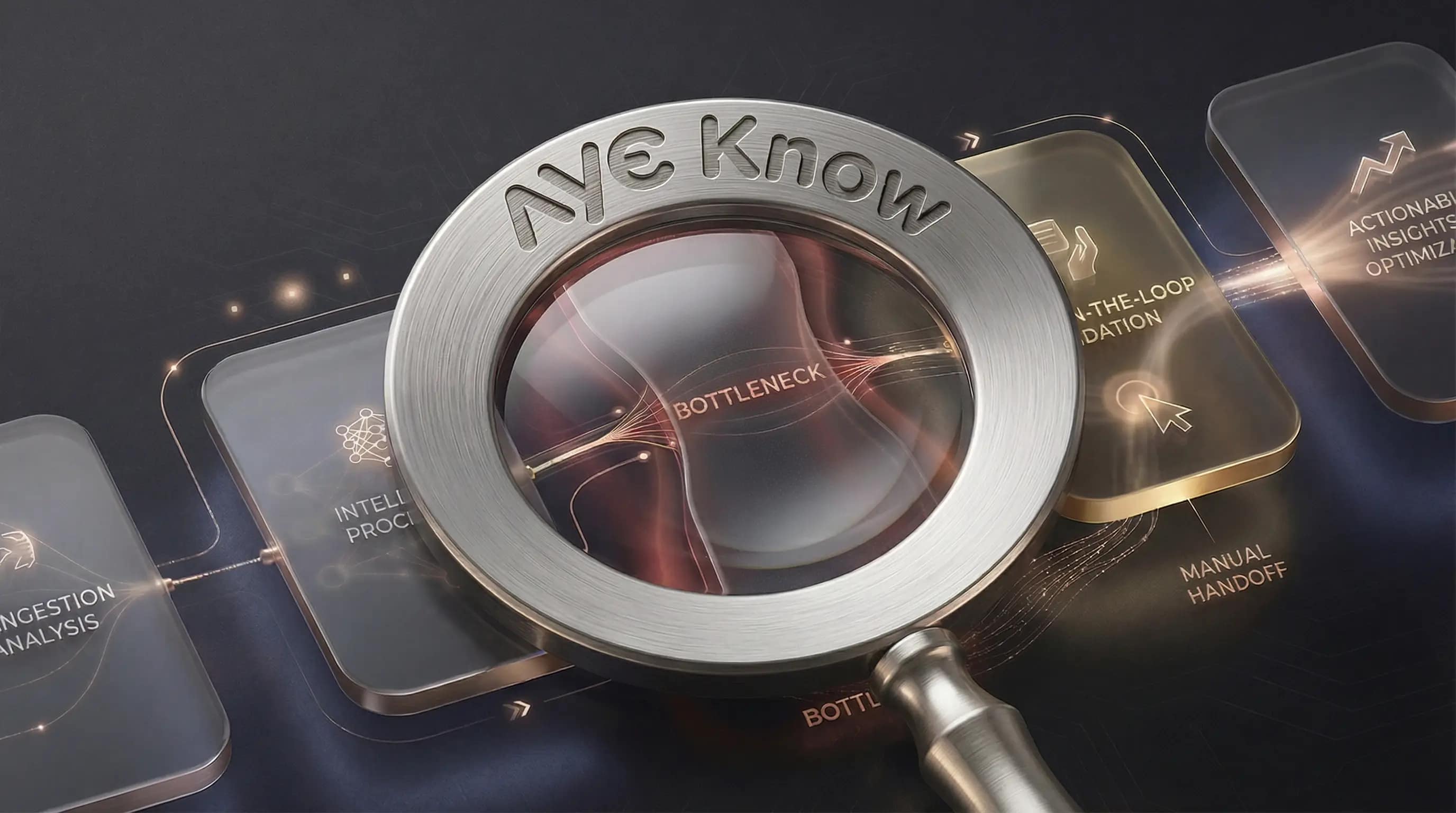
Each phase builds on the previous one: capture, prioritise, implement, and anchor cleanly in operations. The result is not a one-off project, but a sustainable automation build-up.
Working mode
- On-site workshops instead of slide decks
- Prioritisation by impact and feasibility
- Rapid piloting with clean operational logic
For whom:Teams with unclear manual workload, hidden coordination overhead, or high error rates.
When it fits:When process problems are felt operationally but are not yet documented well enough for prioritisation.
Next step:Move into the 90-minute workshop and a structured process analysis.
In structured workshops and interviews, we analyse which workflows consume time, attention and energy every day. Where is there repetition? Where is the error rate high? Where does data exist that is not yet being used? The result is a clear process map with concrete starting points — not a PowerPoint slide deck, but an actionable inventory.
Outputs:
- ✓Documented as-is workflows per process candidate
- ✓Assessment matrix with prioritisation recommendation
- ✓Clear starting catalogue for the next phase
For whom:Teams with several automation candidates but limited implementation capacity.
When it fits:When prioritisation, sequencing and technical feasibility are still unresolved.
Next step:Assess the top three candidates together and define a realistic roadmap.
We prioritise using four criteria: repeatability, data quality, error rate and volume. This produces clear quick-win candidates and a roadmap for the next 6 to 12 months. Technology decisions (which AI, which interface, which connection pattern) are made after this phase — never before.
Outputs:
- ✓Top 3 automation candidates with rationale
- ✓Technology sketch per candidate
- ✓Realistic timeline and resource estimate
For whom:Teams that want to move from an idea to a first live automation.
When it fits:When one to three candidates are already prioritised and implementation trust must be established.
Next step:Move into stepwise piloting and scaling with measurable success goals.
We ensure clean interfaces, traceable data flows, and a handover that your team genuinely understands. Quick wins are not an end in themselves — they build trust in the approach and deliver measurable relief quickly enough to secure acceptance within the company.
Outputs:
- ✓Working automation in live operations
- ✓Technical documentation and handover
- ✓Measurable before-and-after comparison
For whom:Teams that already see results and now need structure, monitoring and clear ownership.
When it fits:When the first automations are no longer experimental and operational reliability becomes necessary.
Next step:Define governance, build the monitoring concept and anchor the scaling roadmap.
We establish clear ownership rules, monitoring concepts, and governance logic that grows without becoming unmanageable. Which automations need to be monitored? Who is responsible when something goes wrong? How are new processes evaluated and prioritised? These questions are answered before the system becomes too complex.
Outputs:
- ✓Governance model for automations in operations
- ✓Monitoring and escalation concept
- ✓Prioritisation framework for further expansion stages
Learning curve
The deciding factor is not the tool, but the speed of the learning curve.
When teams wait for the perfect setup too early, the business loses time. We build one clear first workflow, measure the effect, and use that learning curve for the next steps.